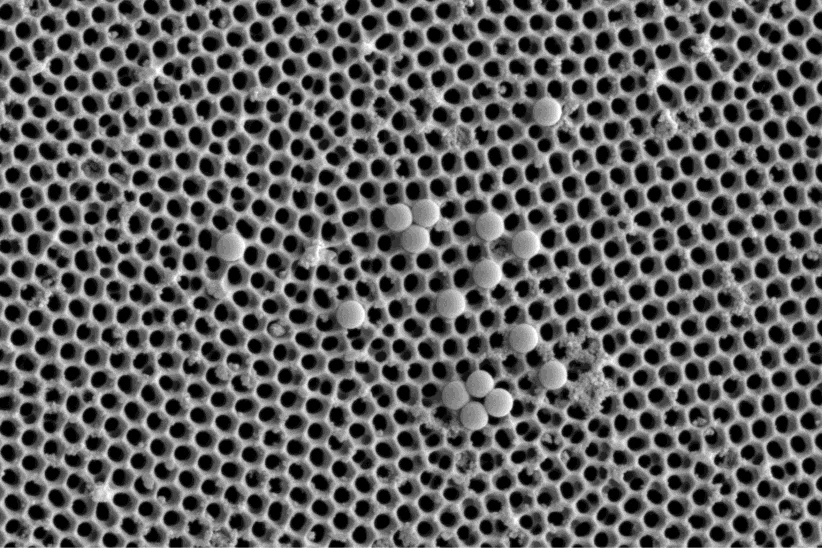
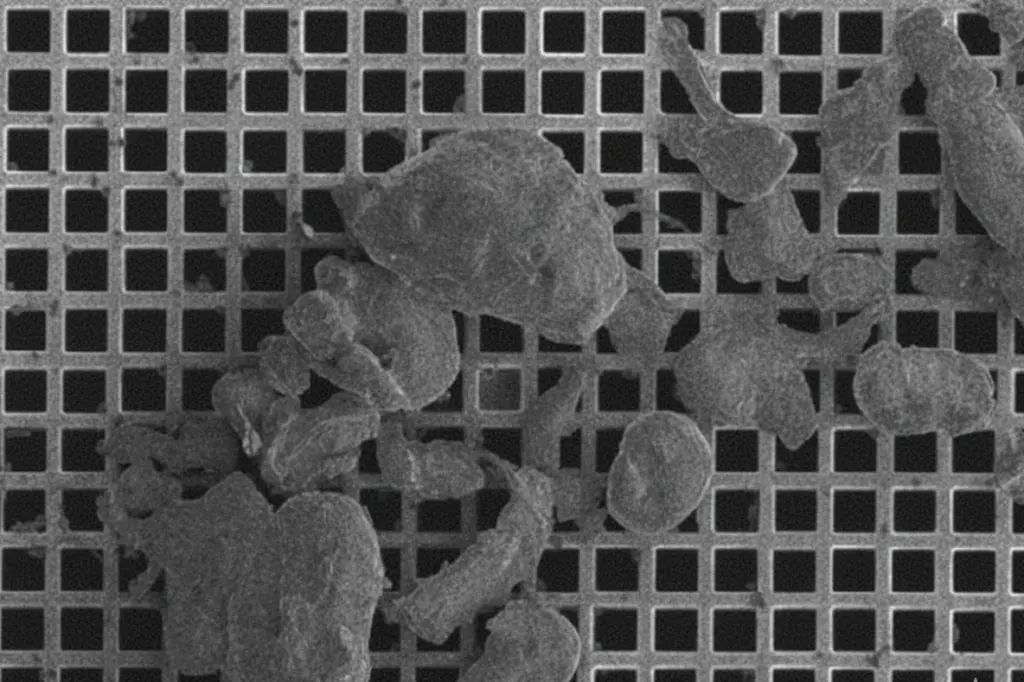
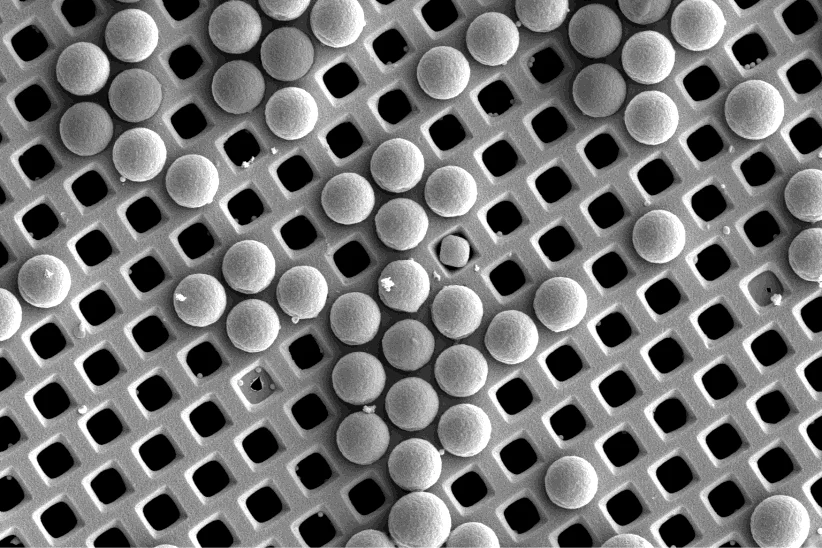
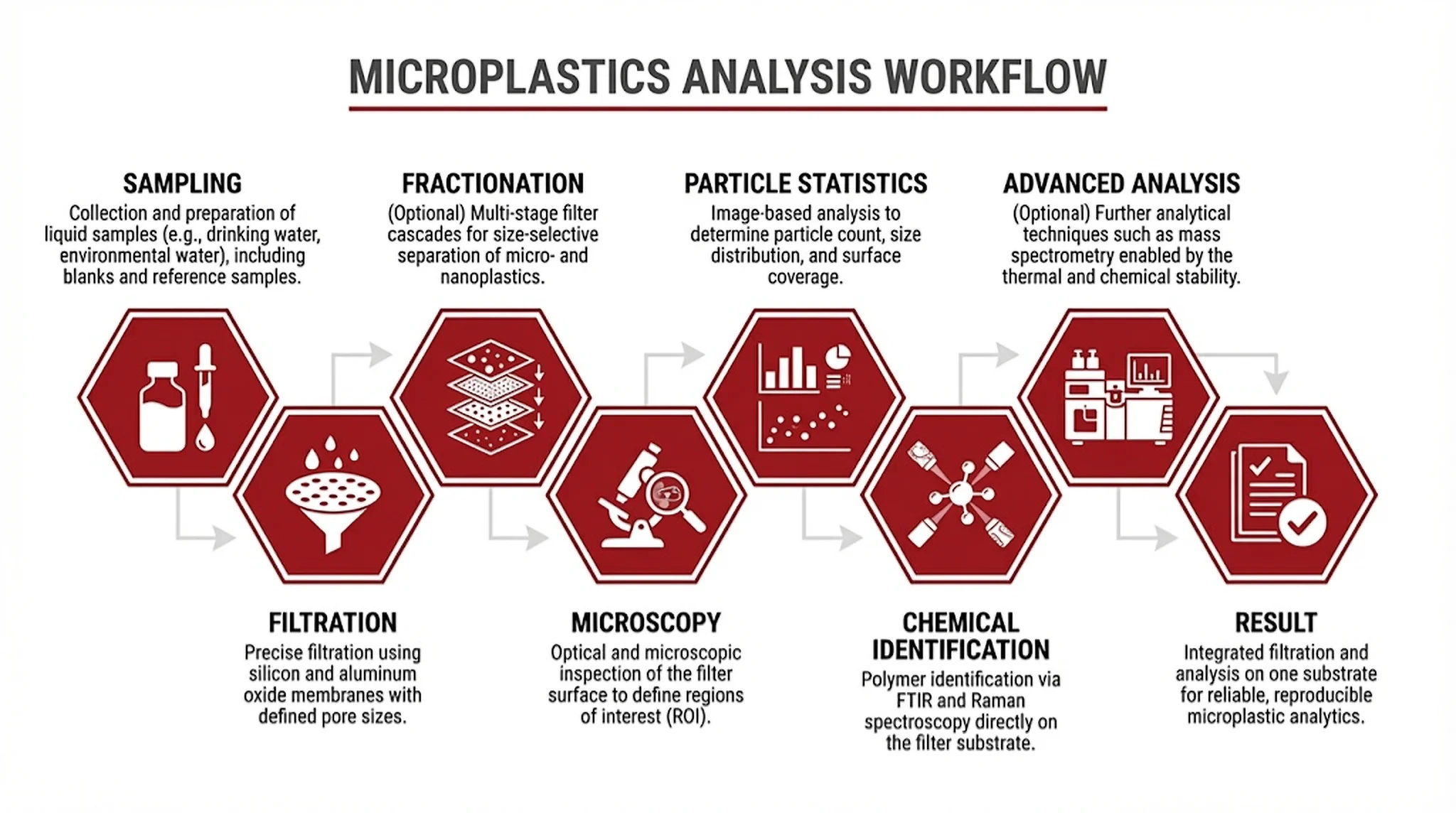

The filtration and analysis of micro- and nanoplastics place high demands on filter materials and analytical workflows. SmartMembranes provides precisely defined silicon and alumina membranes specifically designed for the reliable separation, fractionation, and analysis of microplastic particles.
Thanks to their narrow pore size distribution and high selectivity, the membranes enable reproducible separation across a wide size range, from the micrometer down to the nanometer scale. In multi-stage filter cascades, particles can be selectively fractionated, which is particularly important for standardized analytical procedures and interlaboratory comparison studies
A key advantage of SmartMembranes filters is their excellent compatibility with analytical techniques such as FTIR and Raman spectroscopy. The membranes act simultaneously as filtration medium and analytical substrate, minimizing sample loss and eliminating additional transfer steps. Their high surface planarity and low roughness enable precise microscopic evaluation and reliable identification of polymer materials
Due to the favorable spectral properties of silicon and aluminum oxide, background signals in FTIR and Raman analyses can be effectively reduced. This is essential for the clear identification of polymer fingerprints, even for small particles and low concentrations typically encountered in environmental and drinking water samples
SmartMembranes filters are used worldwide in environmental, water, and materials analytics and are suitable for both research applications and standardized routine analyses. Their thermal and chemical stability further enables use in advanced analytical methods such as mass spectrometry and high-resolution microscopy.